
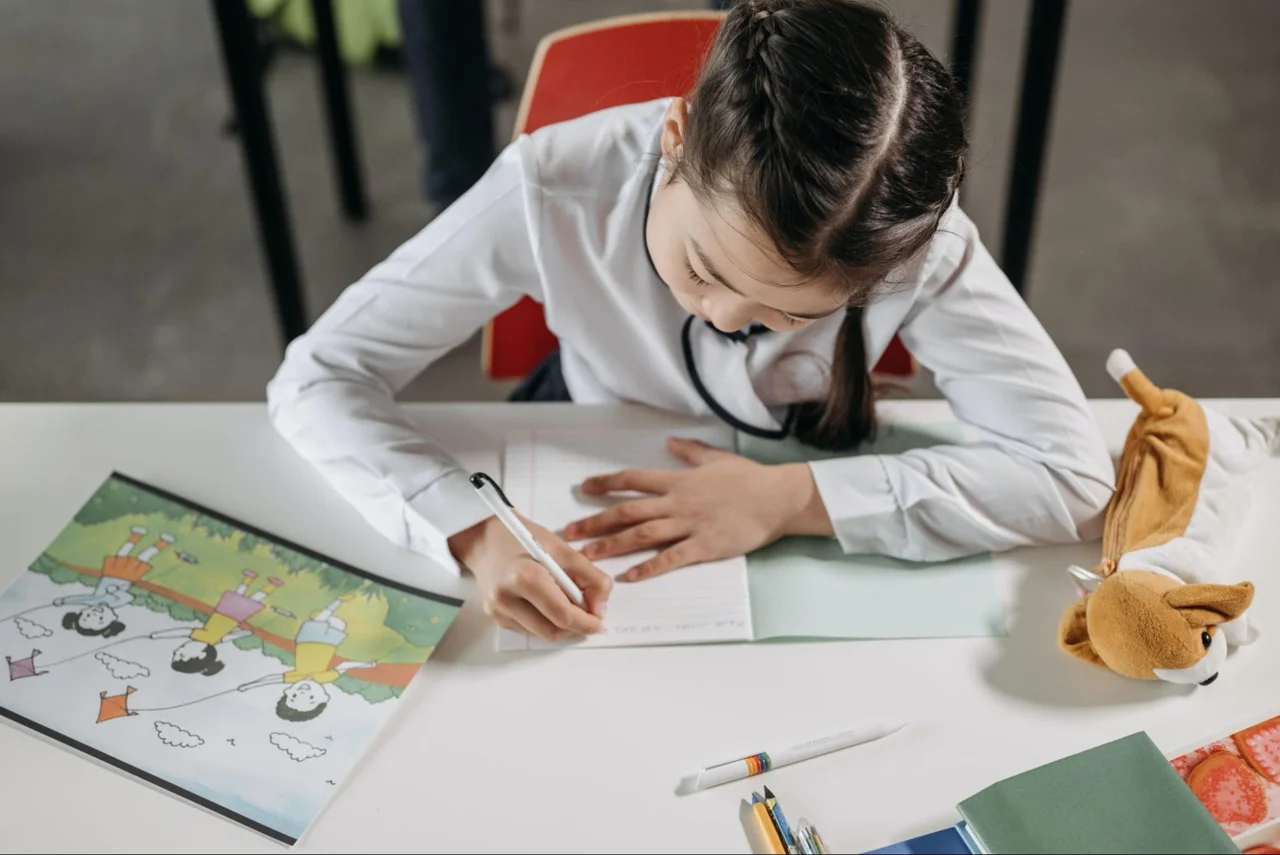
Home practice can give a child time to try an idea, notice a problem and revise it. That is a different activity from completing a timed assessment. Both can be useful, but the first does not need to imitate exam pressure every time.
The routine below is flexible. Adapt the length and level of support to your child, and keep the story in their words rather than turning it into a parent's polished version.
Start with a small change
Ask who the story follows, what they want and what gets in the way. A manageable original idea is: “A child wants to enter a model boat in a pond race, but it starts leaking before the start.”
The child can decide whether the character repairs it, borrows help, changes the design or makes another choice. Avoid supplying every solution. Questions such as “What could they try first?” leave room for the writer to decide.
If a prompt has been supplied, check its requirements before building the idea.
Make a brief plan together
A possible plan is:
- The character arrives pleased with the boat.
- A test launch reveals the leak.
- The first repair fails, and the character asks another entrant for advice.
- A simpler repair works well enough to join the race.
- The character finishes with a new appreciation of testing and accepting help.
This is a possible sequence, not a required five-paragraph formula. The ending need not include winning. Resolving the immediate difficulty can give the story a satisfying direction.
Let the first draft develop
Give the child space to write without correcting every sentence as it appears. If they become stuck, return to the next event or ask what the character notices. A quick sketch or spoken explanation may help them restart.
New ideas can emerge during drafting. Adjust the plan when they improve the story, while checking that the central problem and ending still connect. Planning should support the writer, not prevent a better choice.
First review: can the reader follow it?
Read for the main action before spelling. Who is doing each thing? What caused the problem? Does the attempted solution address it? Is there a missing transition?
For example, if the character suddenly has waterproof tape, the reader may need a brief explanation of where it came from. One sentence can repair the gap; an entirely new scene may be unnecessary.
Choose one substantial improvement rather than demanding every possible change at once.
Second review: develop an important moment
Find the point where the story changes. The child might replace “He was disappointed” with an action: “He lifted the boat and watched another thin stream run from its side.”
Discuss what that detail adds. Keep direct explanation where it is useful; not every sentence needs to become a description. Dialogue can also help when it changes the situation or reveals the character.
Third review: check sentences and conventions
Now look at sentence boundaries, tense, spelling and punctuation. Read a confusing sentence aloud at home and ask what the child intended. Let them try a revision before offering a replacement.
Focus on a recurring issue, such as missing full stops or unclear pronouns, rather than presenting a page full of corrections. Save another target for a later session if needed.
Give feedback the child can use
Name one effective choice and one next action. For example: “The leak gives your character a clear problem. Add a sentence showing why the second repair succeeds.” This is more actionable than “make it better” or a score on its own.
When moving to timed practice, use the task's actual limit and reduce the amount of adult support. Home revision is a learning activity, not permission to assist during an independent assessment.
Continue with timed story planning, showing and telling and dialogue. The parent writing checklist also explains the optional paid human-marking offer for sample responses; a free prompt does not include free human marking.